Breathing is one of the most important vital functions, yet we do not think about it very often, as it mostly happens unconsciously and we take it for granted. However, the way we breathe significantly affects various areas of our lives, including the development of speech and language, and therefore shapes our quality of life.
Proper Breathing
Proper breathing is breathing through the nose. During this, the mouth is usually closed, and the tongue rests against the palate just behind the upper teeth. The tongue muscles press upward against the upper jaw and inward against the alveolar ridge, which allows the jaw—and consequently the entire oral and nasal cavity—to develop properly. In addition, when breathing through the nose, the air is humidified, filtered, and warmed, making it more suitable for entering the sensitive lungs.
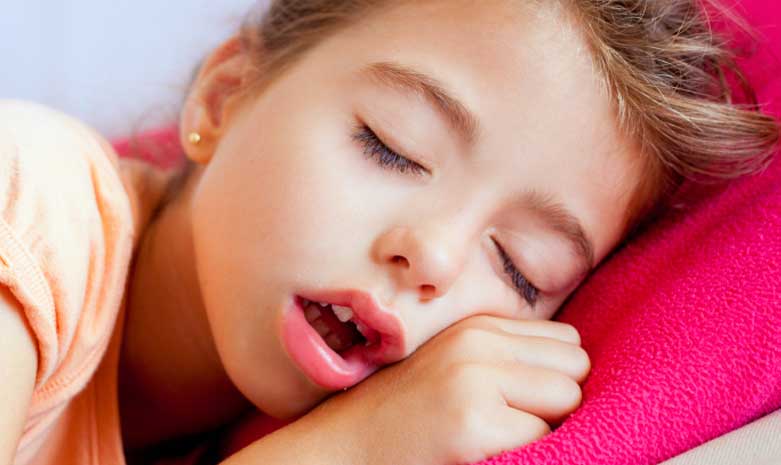
Breathing through the nose is therefore not only recommended, but essential for harmonious development of the face, jaw, teeth, and airways, and it forms the basis for proper posture. Beyond its aesthetic function, nasal breathing affects the entire body, organs, and organ systems. We must be aware that long-term mouth breathing can negatively affect health and leave permanent consequences.
Image source:
https://www.childrensdentistrywga.com/mouth-breathing-breaking-unhealthy-habits/
Causes of Mouth Breathing
The causes of mouth breathing are most often found in our environment and habits, and less frequently are of organic origin. It is often difficult to determine why a child develops mouth breathing. Usually, several causes are present and intertwined:
- a short lingual frenulum (tongue-tie),
- a difficult and traumatic birth,
- a shorter period of breastfeeding,
- prolonged use of a feeding bottle and pacifier, thumb sucking,
- prolonged offering of puréed food and insufficient introduction of solid food,
- parents breathing through the mouth, which children imitate,
- stress,
- environmental toxins (present during pregnancy or early development) that promote respiratory infections and allergies, thereby encouraging mouth breathing.
Consequences of Mouth Breathing
Improper breathing affects quality of life in many ways:
- poorer sleep at night (sleep apnea, snoring, teeth grinding, bedwetting) and daytime fatigue, which contribute to poorer mood, irritability, difficulty concentrating at school, and reduced cognitive abilities,
- more frequent inflammation of the throat, tonsils, and middle ear,
- headaches,
- altered development of cranial bones (children who breathe through the mouth often develop a narrow, elongated face, misaligned teeth, a high palate, and visible gums when smiling),
- difficulties in speech and language development,
- increased risk of dental caries (drier mouth and altered saliva pH),
- poorer vision (astigmatism and myopia),
- changes in the function of the pelvis, knees, hips, and feet,
- may lead to anxiety and even depression.
The Impact of Mouth Breathing on Speech Development
Due to differently developed facial bones, children who breathe through the mouth more often experience difficulties with the correct pronunciation of certain sounds. Problems most commonly occur with the pronunciation of sibilants and postalveolar sounds, as well as some other sounds produced in the front part of the oral cavity. Because of the incorrect facial structure and misaligned teeth, the tongue tends to protrude between the teeth during speech. This is known as interdental articulation.
Since mouth breathing also contributes to more frequent ear infections, attention must be paid to this aspect in speech and language development as well. Inflammation can interfere with the perception of speech sounds, making it difficult to learn correct pronunciation. At the same time, it affects the development of phonological awareness, which is crucial in the early stages of literacy development—it influences learning to read and write and has a significant impact on later academic success.
What Can We Do?
It is crucial to be aware of the importance of nasal breathing, to pay attention to breathing patterns, and to intervene as early as possible when improper breathing is noticed in order to prevent further harmful consequences. It is advisable to consult appropriate professionals (e.g., holistic dentists and dental hygienists, pediatric dentists, orthodontists, pediatricians, otorhinolaryngologists, speech-language therapists, craniosacral therapists, etc.), who can help identify the cause of improper breathing and provide appropriate guidance.
Author: Anja Tkalec, Speech-Language Therapist
Sources and Literature
Does your child breathe through the mouth? (n.d.). Retrieved from https://veva.si/ali-vas-otrok-diha-skozi-usta/
Mouth breathing negatively affects children’s smile, teeth, face and airways. (August 14, 2012). Retrieved from https://www.consciousbreathing.com/articles/mouth-breathing-negatively-affect-childrens-smile-teeth-face-airways/
Hitos, S. F., Arakaki, R., Solé, D., & Weckx, L. L. M. (2013). Oral breathing and speech disorders in children. Jornal de Pediatria, 89(4), 361–365. https://doi.org/10.1016/j.jped.2012.12.007
Causes and consequences of mouth breathing. (n.d.). Retrieved from https://www.vadbenaklinika.si/vzroki-in-posledice-dihanja-skozi-usta/